Author: Peter F. Drucker, 1990
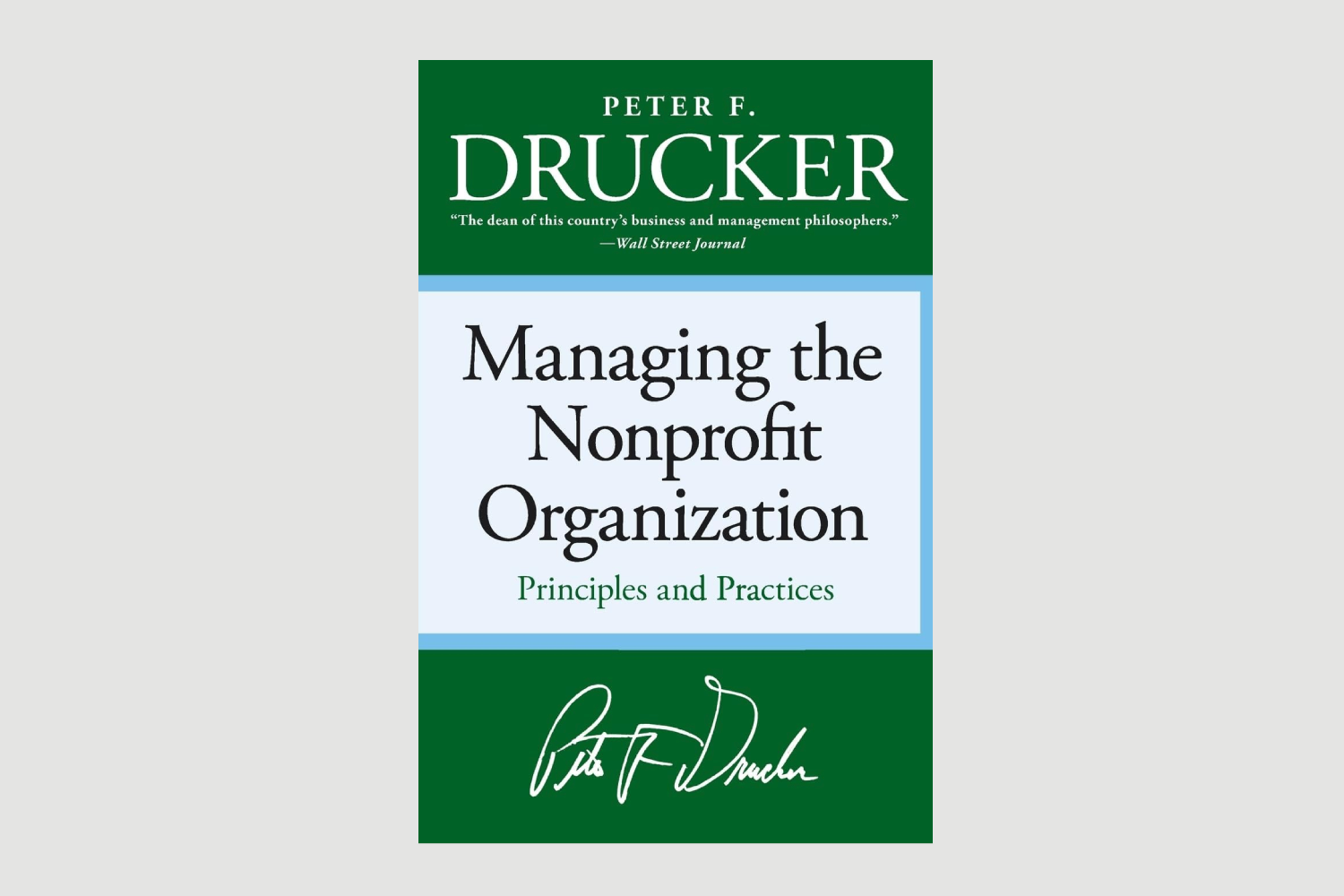
“Non-profit institutions are central to American society and are indeed its most distinguishing feature.”
Extract from Peter F. Drucker’s Book Preface.
Forty years ago, when I first began to work with non-profit institutions, they were generally seen as marginal to an American society dominated by government and big business respectively. In fact, the non-profits themselves by and large shared this view. We then believed that government could and should discharge all major social tasks, and that the role of the non-profits, if any, was to supplement governmental programs or to add special flourishes to them.
Today, we know better. Today, we know that the non-profit institutions are central to American society and are indeed its most distinguishing feature.
We now know that the ability of government to perform social tasks is very limited indeed. But we also know that the non-profits discharge a much bigger job than taking care of specific needs. With every second American adult serving as a volunteer in the non-profit sector and spending at least three hours a week in non-profit work, the non-profits are America's largest "employer." But they also exemplify and fulfill the fundamental American commitment to responsible citizenship in the community. The non-profit sector still represents about the same proportion of America's gross national product—2 to 3 percent—as it did forty years ago. But its meaning has changed profoundly. We now realize that it is central to the quality of life in America, central to citizenship, and indeed carries the values of American society and of the American tradition.
“We now realize that it is central to the quality of life in America, central to citizenship, and indeed carries the values of American society and of the American tradition.”
Official Book Synopsis on Amazon
The groundbreaking and premier work on nonprofit organizations.
The nonprofit sector is growing rapidly, creating a major need for expert advice on non-profit management and how to lead these organizations effectively. Management legend Peter Drucker provides excellent examples and explanations of mission, leadership development, resources, marketing, goals, and much more. Interviews with nine experts also address key issues in this booming sector.
Drucker’s timeless wisdom is organized around five essential areas of performance:
Mission and Leadership: How to define the mission that drives right action and serves as the ultimate test for your organization.
Marketing and Fund Development: Effective strategies to convert good intentions into results, define your market, and build a constituency of donors who contribute because you deserve it.
Managing for Performance: The essential rules for measuring results and making effective decisions when there is no conventional "bottom line."
People and Relationships: Proven practices for making the right people decisions and managing your staff, your board, your volunteers, and your community.
Developing Yourself as a Leader: How to move from executive to leader by taking responsibility for your own growth, effectiveness, and contribution.