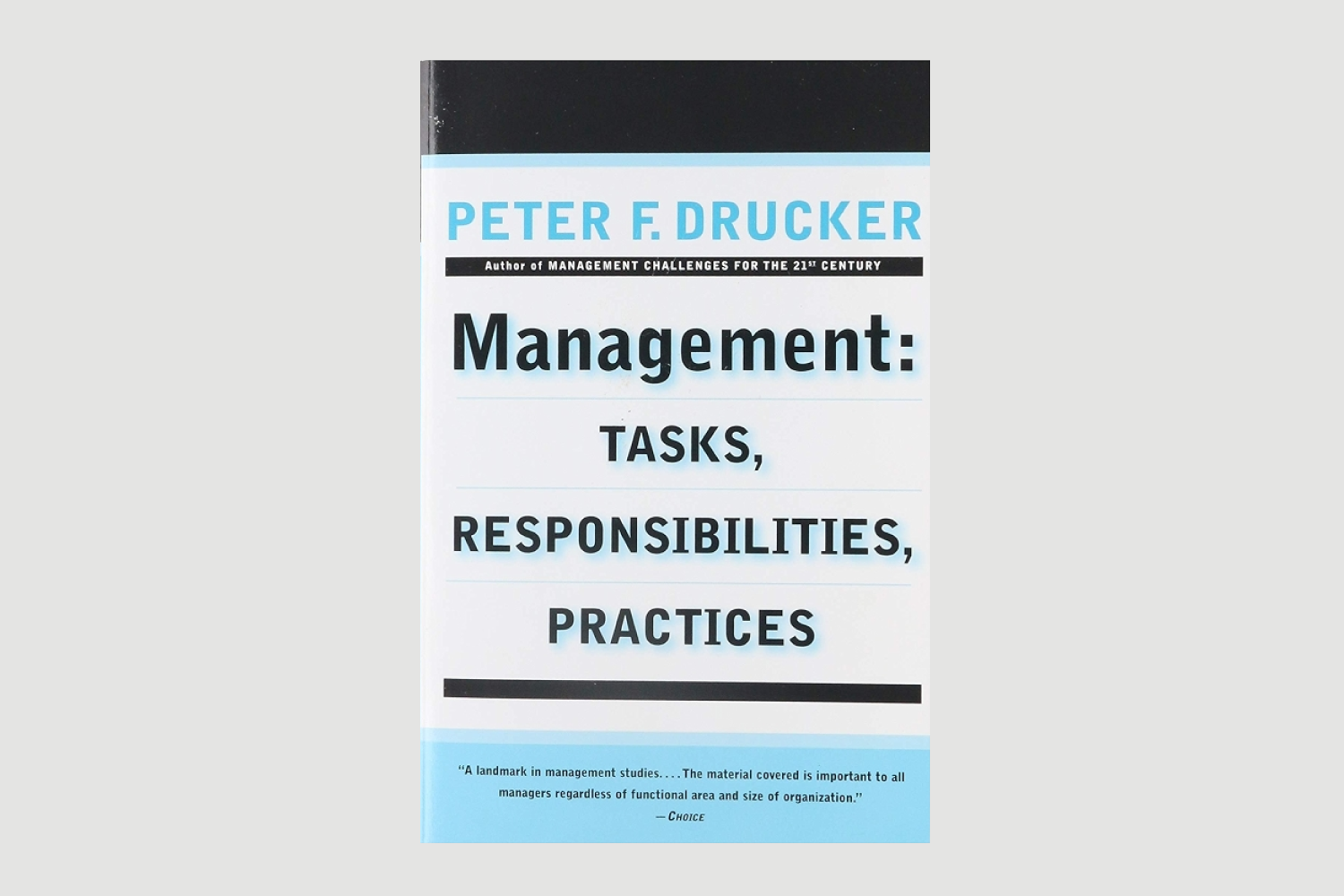
Management: Tasks, Responsibilities, Practices
Author: Peter F. Drucker, 1973
Book preface written by Drucker+ team.
Off the Shelf highlights the books of Peter F. Drucker. This week, we look at Drucker’s fourteenth book, “Management: Tasks, Responsibilities, Practices,” published in 1973.
When Peter Drucker published Management: Tasks, Responsibilities, Practices in 1973, he made an important point that remains remarkably relevant today: management is not simply about achieving economic results. Every organization also has responsibilities to the people and communities its decisions affect.
More than fifty years later, organizations are expected to demonstrate those responsibilities through environmental stewardship, ethical governance, employee well-being, and stakeholder trust. Yet one question remains surprisingly difficult to answer: What does responsible management actually look like?
“This book tries to equip the manager with the understanding, the thinking, the knowledge and the skills for today’s and also tomorrow’s jobs.”
Official Book Synopsis on Amazon
Management is an organized body of knowledge. "This book," in Peter Drucker's words, "tries to equip the manager with the understanding, the thinking, the knowledge and the skills for today'sand also tomorrow's jobs." This management classic has been developed and tested during more than thirty years of teaching management in universities, in executive programs and seminars and through the author's close work with managers as a consultant for large and small businesses, government agencies, hospitals and schools. Drucker discusses the tools and techniques of successful management practice that have been proven effective, and he makes them meaningful and easily accessible.