Which Fatal Flaws Should Leaders Ignore?
People are the organization.
Drucker Institute’s Data Innovation Team
June 2026 Edition
By Chasen Jeffries of the Data Innovation Team at The Drucker Institute.
Imagine two companies.
The first struggles with customer satisfaction but excels in every other area. The second has weak innovation but strong financial performance, employee engagement, and customer loyalty.
Which weakness should leaders address first?
Most leaders can identify weaknesses inside their organizations. The harder question is determining which weaknesses actually matter. Some weaknesses have little effect on overall performance. Others constrain a company's ability to compete, grow, and create value. Understanding the difference can help leaders make better decisions about where to invest limited resources.
This year, the Drucker Institute Data Innovation Team began investigating these weaknesses, what we call "fatal flaws," to better understand how they affect organizational effectiveness and financial strength.
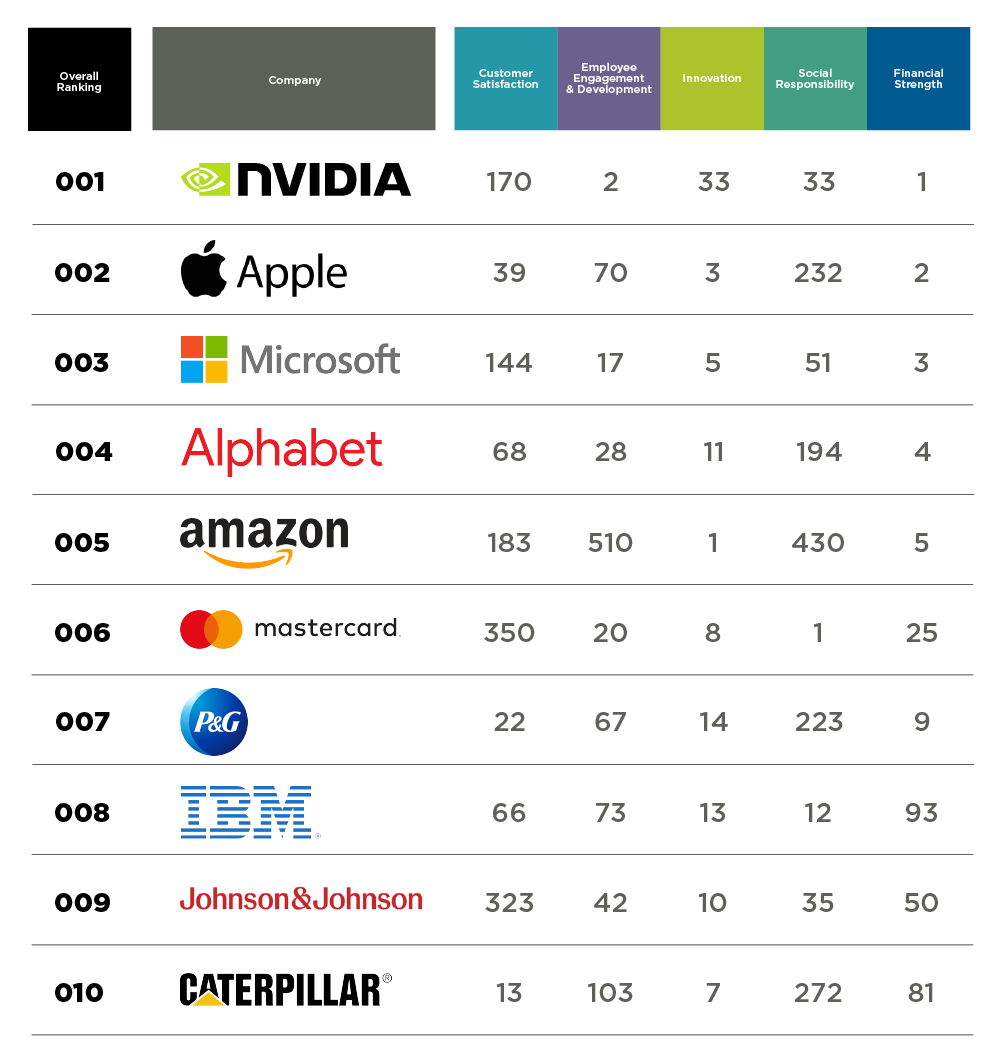
The Drucker Institute Corporate Effectiveness Rankings score companies across five dimensions: Financial Strength, Innovation, Employee Engagement, Corporate and Social Responsibility, and Customer Satisfaction. While all firms operate across these dimensions, they are not equally important in every circumstance. Some weaknesses may have an outsized impact on overall performance, while others may have little effect.
By developing a new way to identify and measure fatal flaws, we hope to better understand which weaknesses deserve leaders' attention and which may not.
Why Fatal Flaws Matter
The dimensions that drive organizational effectiveness do not operate in isolation. They interact with one another, producing effects that are often greater than the sum of their parts.
Improving one dimension can strengthen others. At the same time, heavy investment in one area may unintentionally weaken another. Understanding these relationships is critical for leaders seeking to improve performance.
As firms pursue competitive advantage, managers must constantly make trade-offs in how to allocate resources. Rarely can they invest in everything they would like to improve. Identifying which weaknesses truly inhibit performance and become fatal flaws provides leaders with a clearer roadmap for decision-making.
How We Are Studying Fatal Flaws
The Corporate Effectiveness Rankings provide a unique lens through which to study fatal flaws.
Our research follows a four-step process.
1. Defining a Fatal Flaw
We created a comprehensive definition of a fatal flaw, including measurable components.
A firm has a fatal flaw if it significantly underperforms in a single dimension, such as Employee Engagement, relative to what we would expect statistically given the firm's overall performance.
2. Creating Measurable Thresholds
We operationalized this definition into 24 potential thresholds to identify fatal flaws across four dimensions: Innovation, Employee Engagement, Corporate and Social Responsibility, and Customer Satisfaction.
The fifth dimension, Financial Strength, serves as the outcome against which we evaluate these flaws.
The thresholds are built from three forms of underperformance:
Absolute underperformance: The difference between a firm's two lowest-scoring dimensions.
Relative underperformance: The difference between the expected performance of a firm's lowest-scoring dimension and its actual score.
Cross-company underperformance: Whether a firm's score ranks among the lowest across all firms.
3. Testing the Thresholds
We tested each threshold to determine which most consistently predicted lower firm performance.
More stringent thresholds identified too few firms to be reliable. Less stringent thresholds captured more firms but provided weaker predictive power. The strongest thresholds balanced practical significance with statistical reliability.
4. Applying the Measure
With a validated measure of fatal flaws, we can begin exploring a range of research questions.
Our initial focus is on how fatal flaws affect a company's financial strength.
This approach produces a high-quality measure that can be applied across many research areas and help leaders make more informed decisions.
What We Expect to Learn
While this new measure can help answer many questions, we are currently focused on three.
How Should Leaders Respond to Fatal Flaws?
The primary decision is whether to invest resources in correcting a fatal flaw or continue building on existing strengths. Understanding when each approach is most effective can help firms avoid costly mistakes and allocate resources more strategically.
How Do Fatal Flaws Differ Across Dimensions?
We expect that a Customer Satisfaction fatal flaw will affect firms differently than an Innovation fatal flaw. Understanding these differences will help leaders determine how to respond when weaknesses emerge in specific dimensions.
How Do Fatal Flaws Differ Across Industries?
We expect the importance of each dimension to vary across industries. For example, innovation may play a larger role in the success of technology companies than in retail companies. If so, an innovation fatal flaw may be more consequential in one industry than in another. Understanding these differences can provide leaders with more specific and actionable guidance.
These are only a few of the questions we plan to explore in the coming months. As our research develops, we hope to provide leaders with a clearer understanding of which weaknesses truly matter and how they influence organizational performance.
After all, effective leadership is not about eliminating every weakness. It is about understanding which weaknesses matter most.
What’s next? Our July issue will explore how corporate social responsibility is expressed across the industries represented in the 2025 Drucker Institute Corporate Effectiveness Rankings.
"People are the organization."
That conviction sits at the center of the research agenda we are launching this year. Peter Drucker taught that productivity is not simply the responsibility of the worker. It is a function of how organizations manage, measure, and support the people who do the work.
At the Drucker Institute’s Data Innovation Team, we are translating that insight into rigorous, actionable research. Our central aim is to understand how employee signals move over time, what they reveal about organizational health, and how they relate to financial outcomes.
Over the coming year, we will publish a series of short monthly pieces that pull back the curtain on our projects. Our purpose is straightforward. We want to make the best social science methods useful for leaders and boards so they can make clearer, evidence-based decisions about people and performance.
Read this original essay for a snapshot of the research agenda guiding our first major wave of work.

The Drucker Institute’s Data Innovation Team
Who Is Doing the Work
This effort reflects a genuinely cross disciplinary team.
Becky Reichard leads the conceptual framework and literature integration.
Daniel Martin coordinates data engineering and model implementation.
Chasen Jeffries is developing the fatal flaw framing.
Xu Chen leads the topic modeling and validation pipelines.
Dana Bellinger is writing the employee engagement methodology.
Emily Alpay De Ruyter is leading the financial performance modeling.
Steven Zhou provides consultation on quantitative methods and psychometrics.
See the full team on the Drucker Institute website.
Together, this mix of scholars, data scientists, and practitioners forms the engine required to translate rigorous research into practical insight.
At the Drucker Institute, we believe that what gets measured shapes what gets managed. If people are the organization, then understanding employee signals with clarity and discipline is not a side project. It is central to the work of building effective, responsible, and enduring enterprises.
Inspired by Drucker’s wisdom?
Peter Drucker changed how the world thinks about management.
The Drucker School of Management applies those ideas today through its graduate education, research, and community engagement. Learn more about how they carry forward his vision.
The Drucker Institute promotes effective management and responsible leadership as foundational elements that contribute to Drucker’s vision for a thriving, resilient, and functioning society.