People are the organization.
What the Drucker Institute’s Data Innovation Team Is Building and Why Employee Signals Matter

By the Data Innovation Team at The Drucker Institute and Michael H. Kelly, Executive Director.
"People are the organization."
That conviction sits at the center of the research agenda we are launching this year. Peter Drucker taught that productivity is not simply the responsibility of the worker. It is a function of how organizations manage, measure, and support the people who do the work.
At the Drucker Institute’s Data Innovation Team, we are translating that insight into rigorous, actionable research. Our central aim is to understand how employee signals move over time, what they reveal about organizational health, and how they relate to financial outcomes.
Over the coming year, we will publish a series of short monthly pieces that pull back the curtain on our projects. Our purpose is straightforward. We want to make the best social science methods useful for leaders and boards so they can make clearer, evidence-based decisions about people and performance.
Below is a snapshot of the research agenda guiding our first major wave of work.
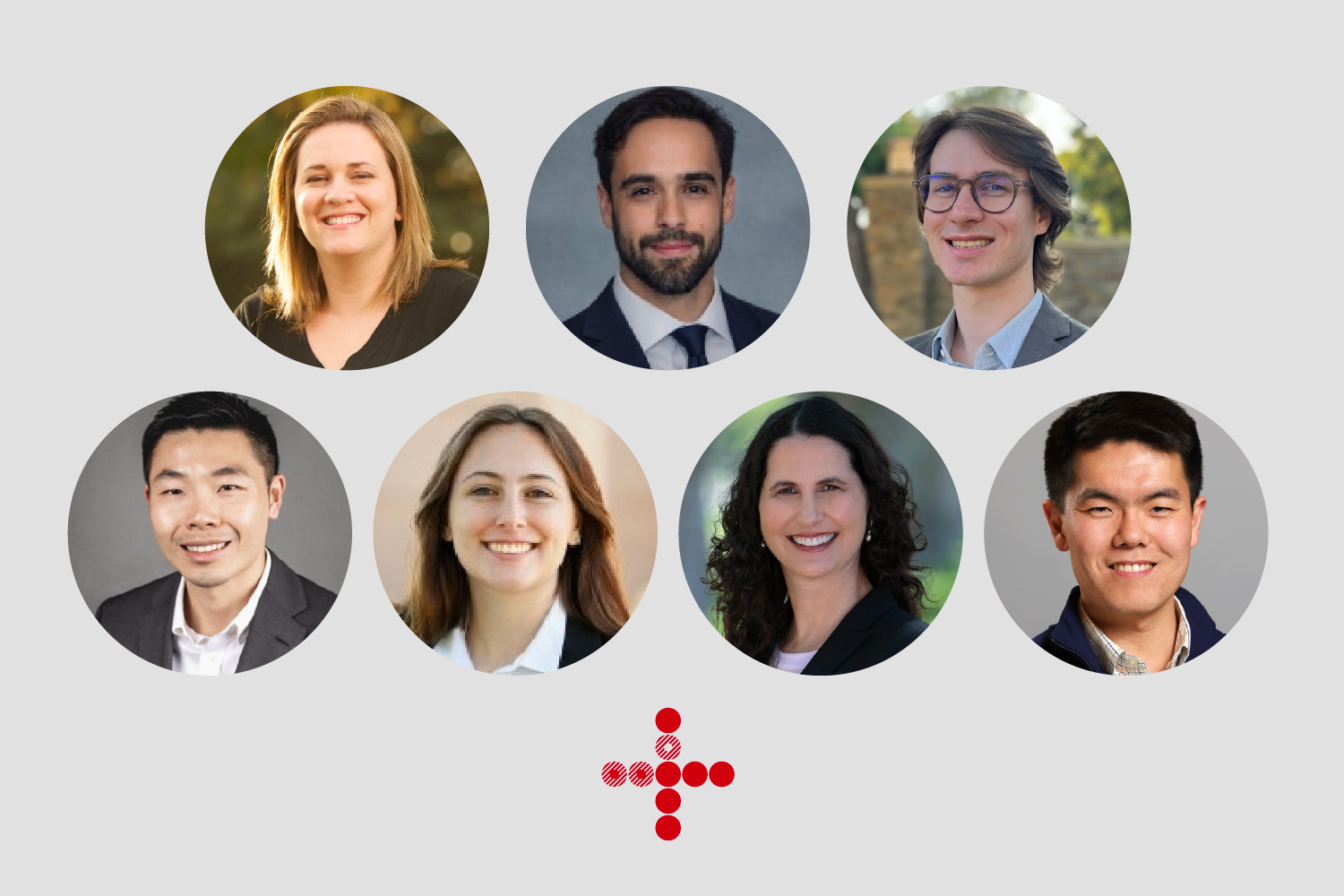
The Drucker Institute’s Data Innovation Team
The Core Question: Employees as Measurable Drivers of Value
Management effectiveness has many dimensions, including customer outcomes, governance, community impact, and financial performance. Our focus is on employees. Employee-related signals, such as surveys, reviews, textual data, and composite indicators, are both empirically rich and practically actionable.
Our first major project centers on three linked research questions.
RQ1. Dimensionality.
Over time, what are the consistent dimensions that make up employee engagement when we combine multiple common indicators?
RQ2. Trajectory.
How do those dimensions evolve across a 24 month window? Are they stable, cyclical, improving, or deteriorating?
RQ3. Cross lagged influence.
Do changes in employee engagement predict future financial performance, and does financial performance predict engagement, when we account for both within company persistence and between company differences?
Why 24 months? Because single snapshots can create false confidence. Organizations make strategic decisions based on trends, not moments. We want to build motion pictures, not Polaroids.
How We Are Studying These Questions
Our approach blends advanced text analytics, modern psychometrics, and longitudinal causal modeling. In practical terms, here is what that means.
From text to metrics.
Written employee feedback is often treated as anecdote. We treat it as data. Using both classic topic modeling and transformer based classification methods, we extract themes and features from text. We then validate those themes against established indicators so they can function as reliable numeric measures. This allows us to preserve the nuance of employee voice while maintaining statistical rigor.
Clarifying what engagement really is.
We combine factor analysis with measurement invariance testing to determine whether the same underlying constructs, such as compensation satisfaction, career opportunity, or psychological safety, hold up over time and across industries. If a construct shifts in meaning, longitudinal comparisons become misleading. We test for that directly.
Modeling trajectories.
With latent growth techniques, we map how engagement dimensions evolve across the two year period. These models allow us to estimate not only average change but also the distribution of change. Which companies are improving? Which are declining? Which are volatile?
Testing causal sequencing.
To examine directionality, whether engagement influences financial performance or financial performance influences engagement, we use random intercept cross lagged panel models. These models separate stable differences between companies from fluctuations within companies over time. This gives us stronger leverage on questions of temporal precedence.
Ensuring robustness.
Across every step, we hold out data, conduct manual tagging to check automated classifications, and triangulate across multiple financial metrics, both market based and accounting based. Our goal is to ensure that findings are not artifacts of a single model or measure.
What We Expect to Learn and Why It Matters
As the work unfolds, we will test and refine three broad themes.
Engagement is multi-dimensional, and the dimensions matter.
Reducing engagement to a single score risks masking real problems. Identifying concrete dimensions, such as opportunities for growth, managerial support, or compensation clarity, enables targeted interventions that are more efficient and more defensible.
Time shapes return on investment.
Some interventions produce rapid shifts in sentiment but fade quickly. Others, especially those tied to managerial capability or structural change, may take quarters to show up in customer or financial metrics. Understanding these lag structures helps leaders set realistic expectations and align strategy with time horizon.
Weaknesses may be fatal, but context shapes their impact.
One severely underperforming dimension, a potential fatal flaw, may predict disproportionate financial risk in certain industries or company sizes. We are explicitly testing tradeoffs. Should firms concentrate resources on shoring up weaknesses, or should they invest more heavily in compounding their strengths? The answer may depend on context, trajectory, and financial exposure.
In practice, this research aims to produce more actionable analytics. Executives should have dashboards that clearly identify which employee signals are most predictive of future revenue, margin, or volatility. Boards should have a language that connects human capital decisions to financial reasoning. Investors should be able to distinguish short-term noise from durable organizational capability.
This is not about measuring sentiment for its own sake. It is about understanding whether and how people practices create durable value.
Who Is Doing the Work
This effort reflects a genuinely cross disciplinary team.
Becky Reichard leads the conceptual framework and literature integration.
Daniel Martin coordinates data engineering and model implementation.
Chasen Jeffries is developing the fatal flaw framing.
Xu Chen leads the topic modeling and validation pipelines.
Dana Bellinger is writing the employee engagement methodology.
Emily Alpay De Ruyter is leading the financial performance modeling.
Steven Zhou provides consultation on quantitative methods and psychometrics.
See the full team on the Drucker Institute website.
Together, this mix of scholars, data scientists, and practitioners forms the engine required to translate rigorous research into practical insight.
At the Drucker Institute, we believe that what gets measured shapes what gets managed. If people are the organization, then understanding employee signals with clarity and discipline is not a side project. It is central to the work of building effective, responsible, and enduring enterprises.
Most-Effective Companies - Annual Rankings
Learn more about one of the initiatives being produced by the Data Innovation Team.
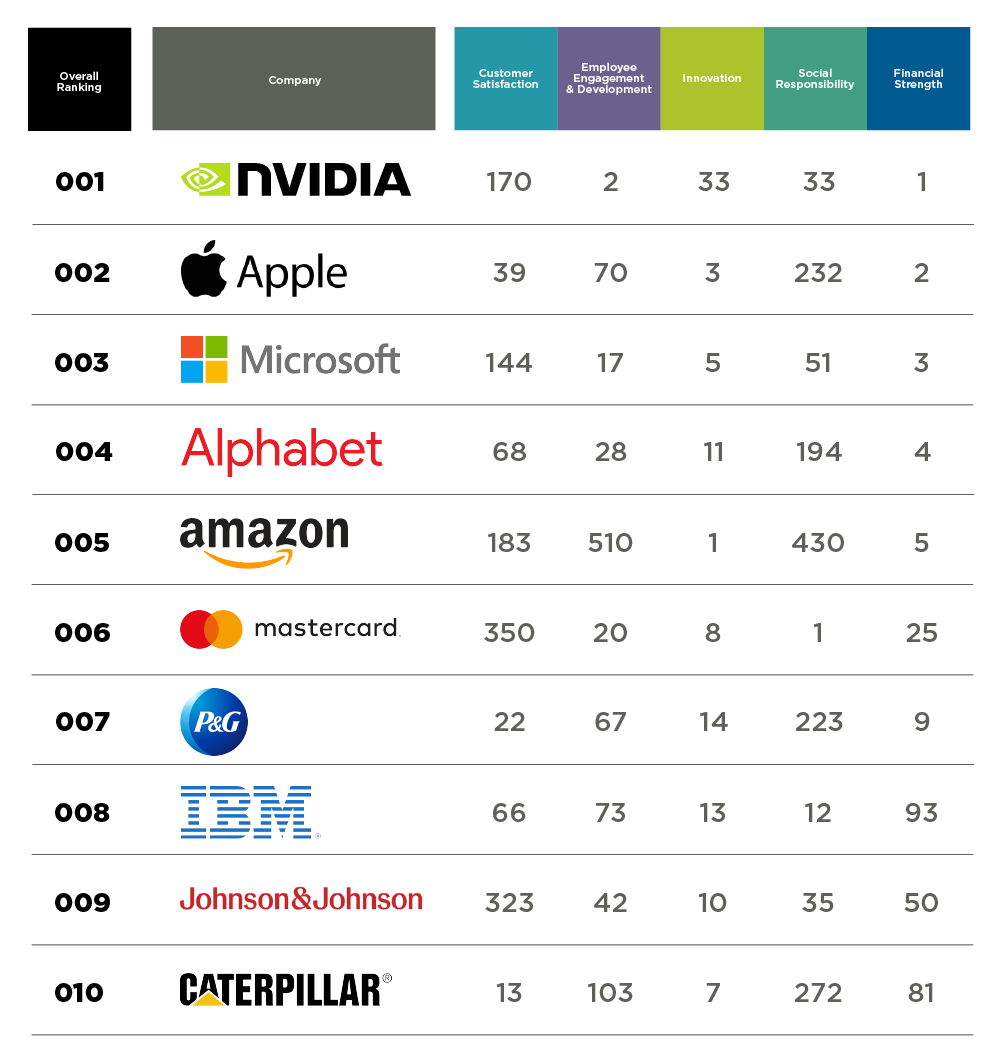
The Drucker Institute’s ranking model highlights America’s top 250 publicly-traded companies who are “Doing The Right Things Well” - based on their ‘Effectiveness’ and their ability to contribute to a ‘Functioning Society’ according to Drucker’s five key dimensions.
The 2025 ranking launched publicly on December 8, 2025.
Inspired by Drucker’s wisdom?
Peter Drucker changed how the world thinks about management.
The Drucker School of Management applies those ideas today through its graduate education, research, and community engagement. Learn more about how they carry forward his vision.
The Drucker Institute promotes effective management and responsible leadership as foundational elements that contribute to Drucker’s vision for a thriving, resilient, and functioning society.