The Secret to Outperformance
Why the Best Companies Are Imbalanced on the Outside and Aligned on the Inside

By Dr. Jonathan Matzinger
A leading strategy and marketing researcher based at the University of Bern in Switzerland
New research suggests that companies win not by being great at everything, but by being exceptional at something, while staying internally aligned.
For years, corporate leaders have been handed a familiar prescription. Strengthening culture. Improve compensation. Invest in innovation. Deepen customer relationships. Maintain financial discipline. The assumption behind it all is straightforward. The more the better. The more balanced the organization, the better it will perform.
It is an appealing idea. It is also incomplete.
The data is clear: companies that consistently outperform do not simply strive for balance across every dimension. They operate according to a more demanding logic. They are disciplined about alignment on the inside, deliberately uneven in how they compete on the outside. That distinction turns out to explain a great deal about why some companies keep pulling ahead while others, despite doing most things adequately, never quite break away.
Inside: Balance as a System
Inside the organization, balance matters enormously, but not in the way most leaders think about it. It is not about achieving high scores across every metric. It is about coherence. When leadership, compensation, values, and day-to-day experience reinforce one another, companies function. When they do not, the system strains.
New work from the Drucker Institute's Data Innovation Team makes this precise. Drawing on thousands of data points on employee behaviors, the team finds that what leaders experience as culture is actually the interaction of multiple forces: the balance between what work demands and what it provides, the accumulation or depletion of resources people rely on, and whether individuals feel genuine autonomy, capability, and connection in their work. When these forces align, engagement holds and performance is resilient. When one breaks down, the whole system becomes fragile.
This helps explain why so many cultural interventions disappoint. Leaders can usually sense the symptoms: engagement fades, turnover rises, results weaken. But they struggle to name the cause. Is it burnout? A breakdown in trust? A shortage of resources? Too often the answer is guessed at. The Drucker Institute's insight is that these symptoms rarely have a single source. They reflect a system under strain, and systems cannot be fixed one metric at a time.
Peter Drucker captured something similar decades ago. Organizations are not collections of programs. They are systems. Their effectiveness depends on whether those systems hold together and whether people experience them as coherent and fair. Internal balance, in this sense, is about a balanced system.
Outside: Imbalance as a Strategy
Where the logic changes is when you step outside the organization and look at how companies actually compete.
Here, the instinct toward balance can become a liability.
Recent research from the University of Bern, drawing on corporate effectiveness data from the Drucker Institute, finds that companies with pronounced strength in one or two areas, while remaining merely adequate in others, tend to generate higher returns than those that are strong across the board. The default approach in most organizations is to smooth out weaknesses and raise averages. But markets do not reward averages. They reward distinction.
Customers do not experience companies as balanced portfolios of capability. They respond to what stands out. Investors behave similarly. As Michael Mauboussin has argued, outcomes in competitive markets are driven by extremes rather than incremental differences. Being slightly better rarely changes the equation. Being meaningfully better in one place often does.
Jensen Huang's Nvidia did not try to compete across every segment of the semiconductor industry. It focused relentlessly on a capability that would become central to the future of computing. What once looked like a narrow bet now defines the company's advantage. Satya Nadella followed a similar path at Microsoft, concentrating resources on cloud and the developer ecosystem rather than optimizing evenly across the company's many legacy strengths. The result was not a more balanced company, but a more distinctive one.
These are not cases of imbalance by neglect. They are cases of imbalance as a strategy.
Imbalanced on the Outside and Balanced on the Inside
Mapping these two dimensions reveals four distinct positions, and one with the greatest outperformance. Companies that are internally balanced and externally imbalanced are the consistent outperformers. They know what they stand for, they have built an organization that holds together
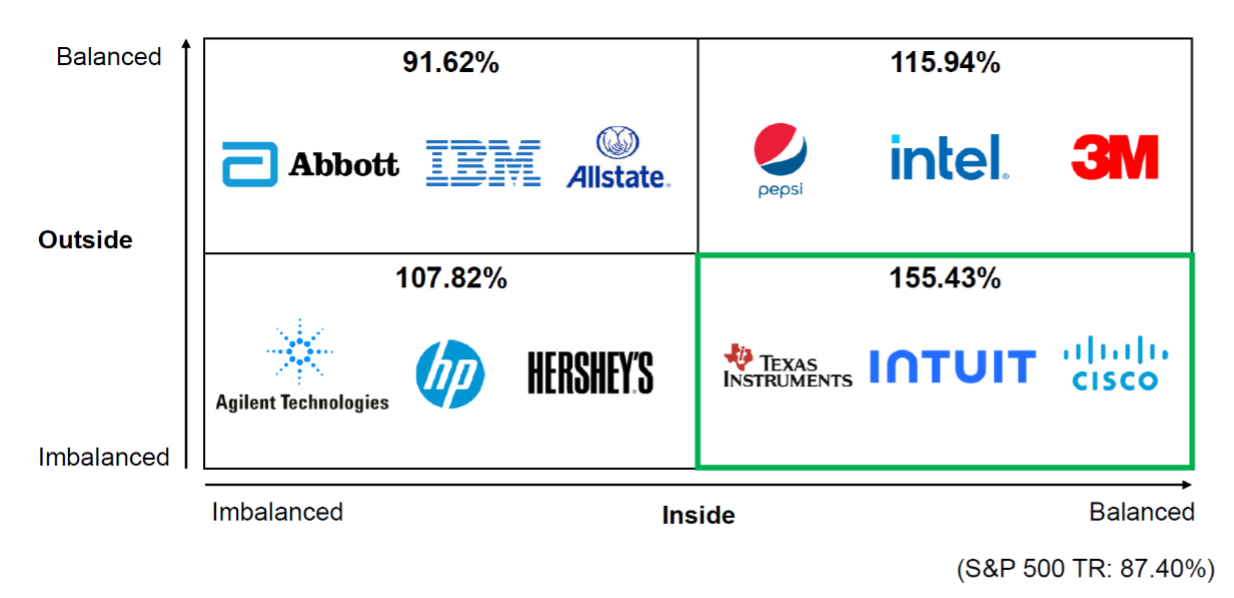
Figure 1: Balanced on the Inside – Imbalanced on the Outside
Total Returns & Exemplary Firms (2018 – 2023)
The Real Challenge
Management language has long emphasized balance. Balanced scorecards, balanced portfolios, balanced leadership. There is nothing inherently wrong with the idea. But it applies unevenly.
Balance is essential inside the organization. Culture, compensation, leadership, and development practices must align. Without that alignment, the system cannot sustain performance. Outside the organization, balance is often a distraction. What matters there is whether the company stands out in a way that others cannot easily replicate.
Peter Drucker anticipated this logic in his distinction between efficiency and effectiveness. Organizations that try to improve across every dimension may become more efficient. They refine processes, reduce errors, and raise overall performance. But effectiveness requires choice. It demands that leaders decide where excellence will matter most and accept that other areas will play a supporting role.
The research now gives that intuition empirical weight. The companies that align internally while choosing to be exceptional externally are the ones that ultimately outperform.
The real challenge for leaders is no longer improving everywhere possible. It is whether they are willing to decide what matters most and build an organization coherent enough to deliver on that choice.
Inspired by Drucker’s wisdom?
Peter Drucker changed how the world thinks about management.
The Drucker School of Management applies those ideas today through its graduate education, research, and community engagement. Learn more about how they carry forward his vision.
The Drucker Institute promotes effective management and responsible leadership as foundational elements that contribute to Drucker’s vision for a thriving, resilient, and functioning society.