What Makes an Organization Effective?
A new chapter in the Drucker Institute's research
By Michael H. Kelly, The Drucker Institute at Claremont Graduate Univeristy
At a glance:
A new name that matches the research.
Our annual ranking, best known for its list of America's ‘best-managed’ companies, is being renamed to reflect what the research has always measured: “organizational effectiveness”.Significantly upgraded research methods.
Our Data Innovation Team has rebuilt key parts of the measurement system, letting us see things we could not see before, including a new measure called Fatal Flaw.The Drucker Institute 100.
The inaugural Drucker Institute 100, recognizing America's most effective publicly traded corporations, will be released on a live Zoom briefing in the first week of December.Our first report on the data. After the briefing, we will publish the Institute's first report on the ranking data and the key trends in it.
Opening our research to others.
The Institute will publish findings, collaborate with outside researchers, and work with organizations that want to understand their own effectiveness.
Best-Managed
Organizational Effectiveness
Why a New Name
For more than a decade, the Drucker Institute at Claremont Graduate University has pursued one of Peter F. Drucker's most enduring questions: What makes an organization effective?
For Drucker, effectiveness was about results, meaning whether an organization accomplishes what it exists to accomplish. As he wrote in Management: Tasks, Responsibilities, Practices (1973), "Efficiency is concerned with doing things right. Effectiveness is doing the right things."
In 1963, in a Harvard Business Review article titled "Managing for Business Effectiveness," Drucker warned that the tools organizations relied on, especially accounting data, focused almost entirely on efficiency. What was needed, he wrote, was "a way to identify the areas of effectiveness" and a method for concentrating on them.
Half a century later, the Institute set out to answer that call. Lawrence A. Crosby and the Institute's founding research staff translated Drucker's ideas into a framework built on five dimensions: Customer Satisfaction, Employees, Innovation, Social Responsibility, and Financial Strength. From the start, Crosby described the goal in Drucker's terms: measuring effectiveness, or "doing the right things well."
That research became the basis for an annual ranking first published in The Wall Street Journal in 2017 as the Management Top 250. The ranking brought the work to a broad audience under the language of management, but "best managed" never fully captured what the research measures. We were not grading managers or management practices. We were examining evidence of organizational effectiveness. The ranking was one expression of the research, not its origin.
We are retiring that name. The ranking is catching up with the research, and the research itself is becoming the larger story.
“Efficiency is concerned with doing things right. Effectiveness is doing the right things.”
What We Can See Now
In 2025, the Institute created the Corporate Effectiveness Data Innovation Team, charged not with maintaining that system but with rethinking how each dimension is measured. The five dimensions remain. What we can learn from them has changed.

#1: Hidden weaknesses.
A company can post a strong overall score while one part of the organization lags far behind the rest. The team's new Fatal Flaw measure is designed to catch exactly that: a single weakness that strong performance elsewhere can hide. The team tested 80 different ways of defining a fatal flaw and selected the one that best anticipated future financial performance. It speaks to a question every leadership team faces: with limited resources, should you double down on your strengths or fix your weakest area? This new Fatal Flaw will be published alongside the 2026 rankings.
#2: What employees actually experience.
A close review found that indicators long labeled "engagement" were in fact measuring whether employees are satisfied with their workplace and see opportunities to develop. The team built a true engagement measure, analyzing the language in more than half a million employee reviews to gauge how connected employees feel to their organization. The dimension is now called Employee Satisfaction, Engagement, and Development, a name that matches what it measures.
#3: How the pieces connect.
The upgraded methods reveal clearer relationships among the five dimensions. Strength among employees is more closely tied to innovation, and innovation serves as a stronger bridge to customer satisfaction. The connection between employees and financial results appears to run largely through innovation and customers.
#4: A clearer signal.
The new approach reduces the influence of any one data source on a company's score. When tested with the 2025 data, the new overall ranking closely matched the results of the previous method. The team has also reviewed the historical data behind the rankings and strengthened the checks applied to every data source. These methods will be the basis for the 2026 rankings.
The Drucker Institute 100
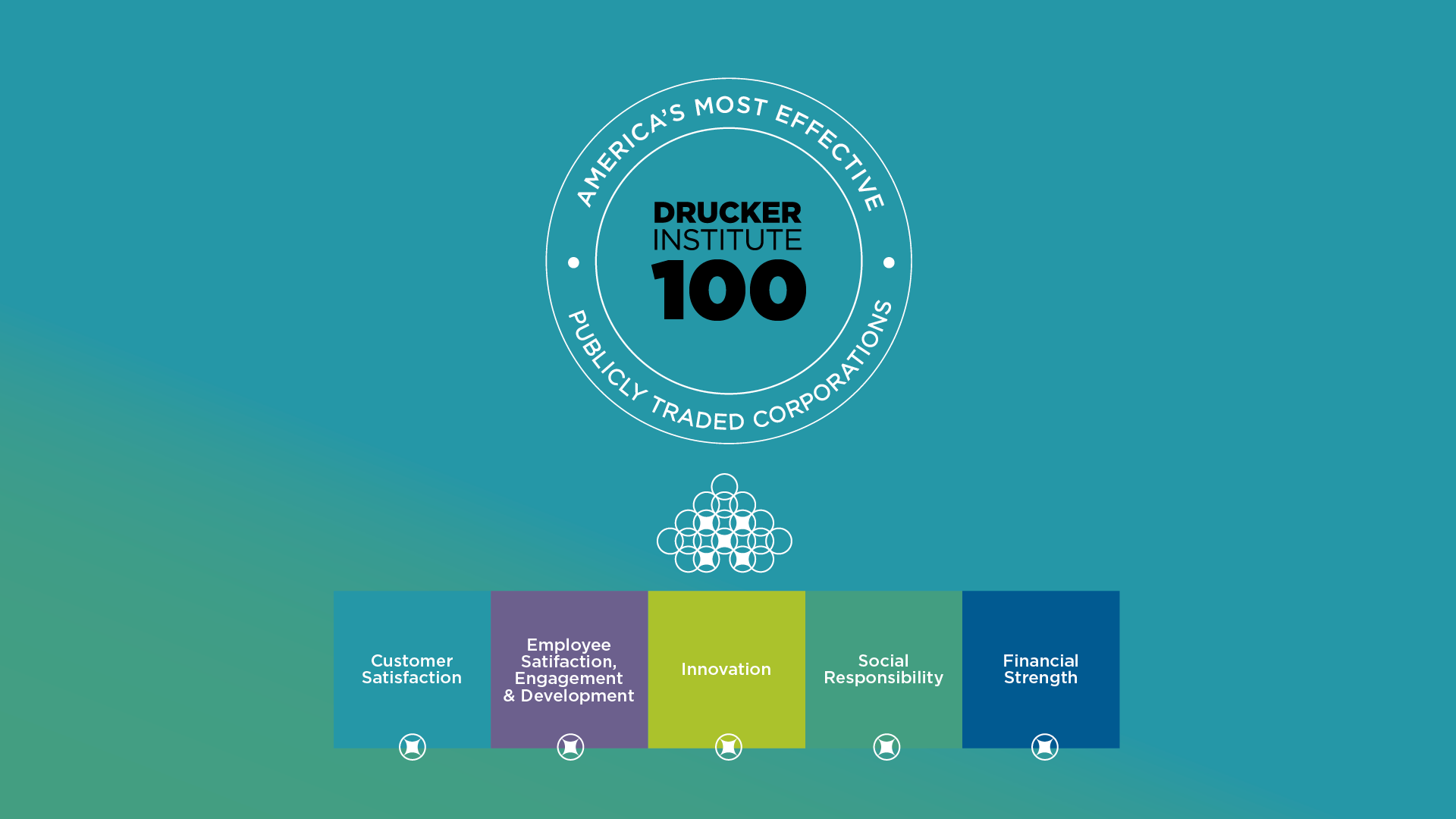
In the first week of December, we will introduce the Drucker Institute 100, recognizing America's most effective publicly traded corporations. It carries forward the five dimensions and more than a decade of longitudinal data, measured with a new generation of methods. It is the most advanced version of this work we have produced.
We will release the list on a live Zoom briefing, where the Data Innovation Team will walk through the results and take questions. After the briefing, we will publish the first Drucker Institute report on the ranking data, with the key trends we see in it.
Opening Our Research
A ranking provides a snapshot. Years of evidence let us study change: how effectiveness is created, sustained, weakened, and lost, and what leaders can learn from those patterns.
We will publish our findings, submit research for scholarly review, collaborate with outside researchers, and work directly with organizations that want to understand their own effectiveness and trajectory. Beginning in January, we will release further research from the Data Innovation Team.
When people want to understand what makes an organization effective, we want them to look to the Drucker Institute at Claremont Graduate University. The rankings are one way we measure effectiveness. Understanding effectiveness is the larger work.
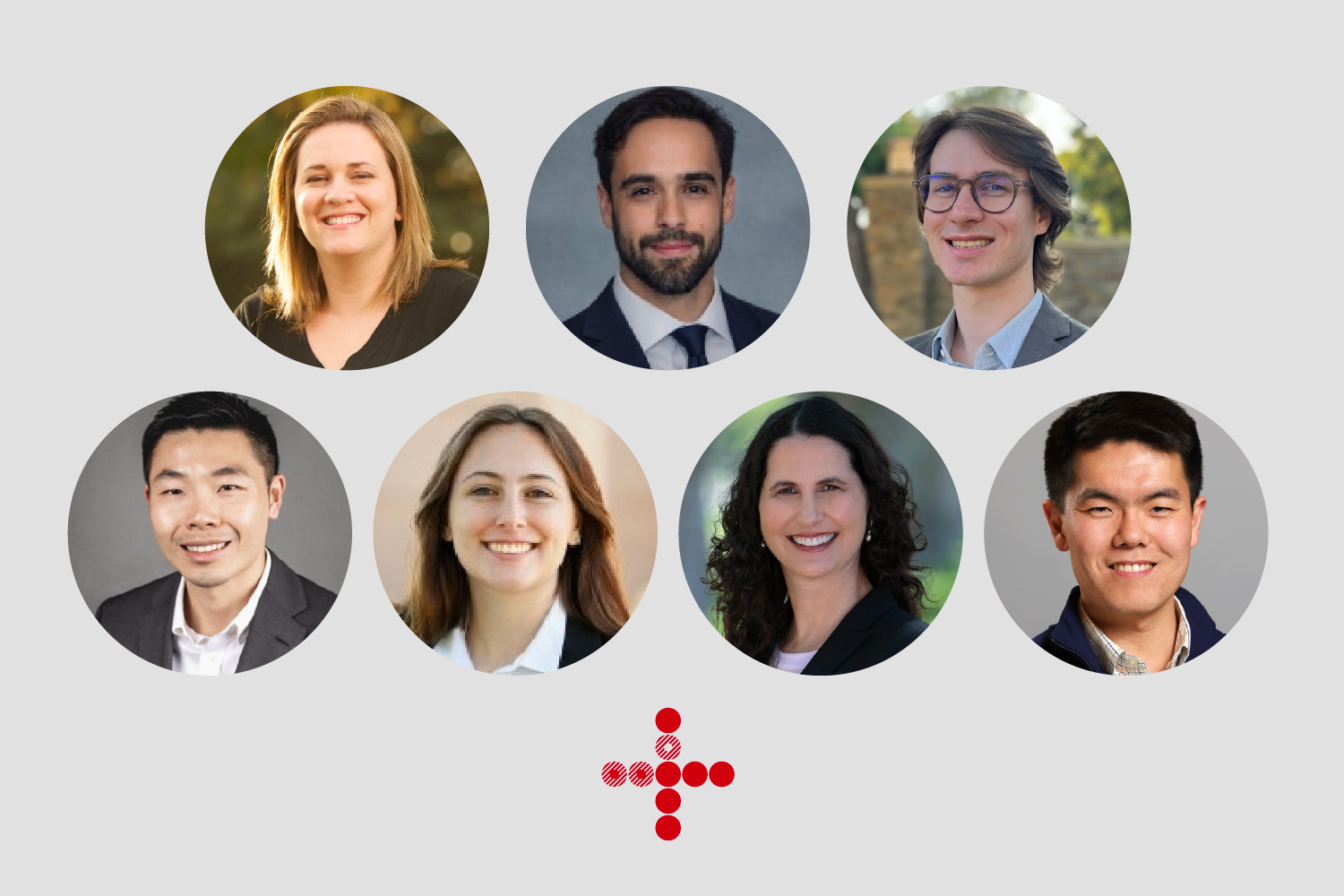
See the full team on the Drucker Institute website.

Read this original essay for a snapshot of the research agenda guiding our first major wave of work.
2017-2025: read this essay about the historical rankings.
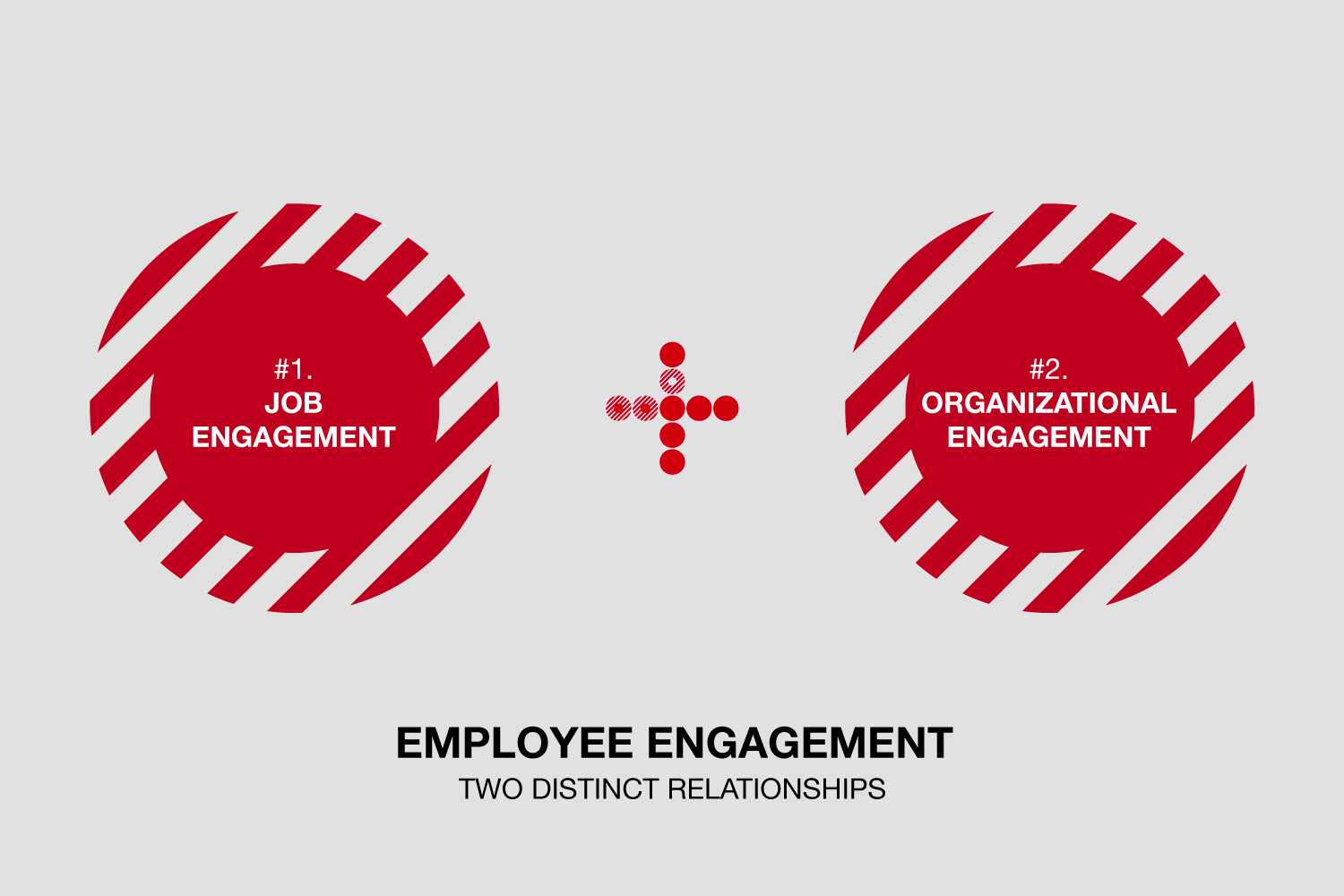
Read the Data Innovation Team’s essay: What Does Employee Engagement Really Mean?

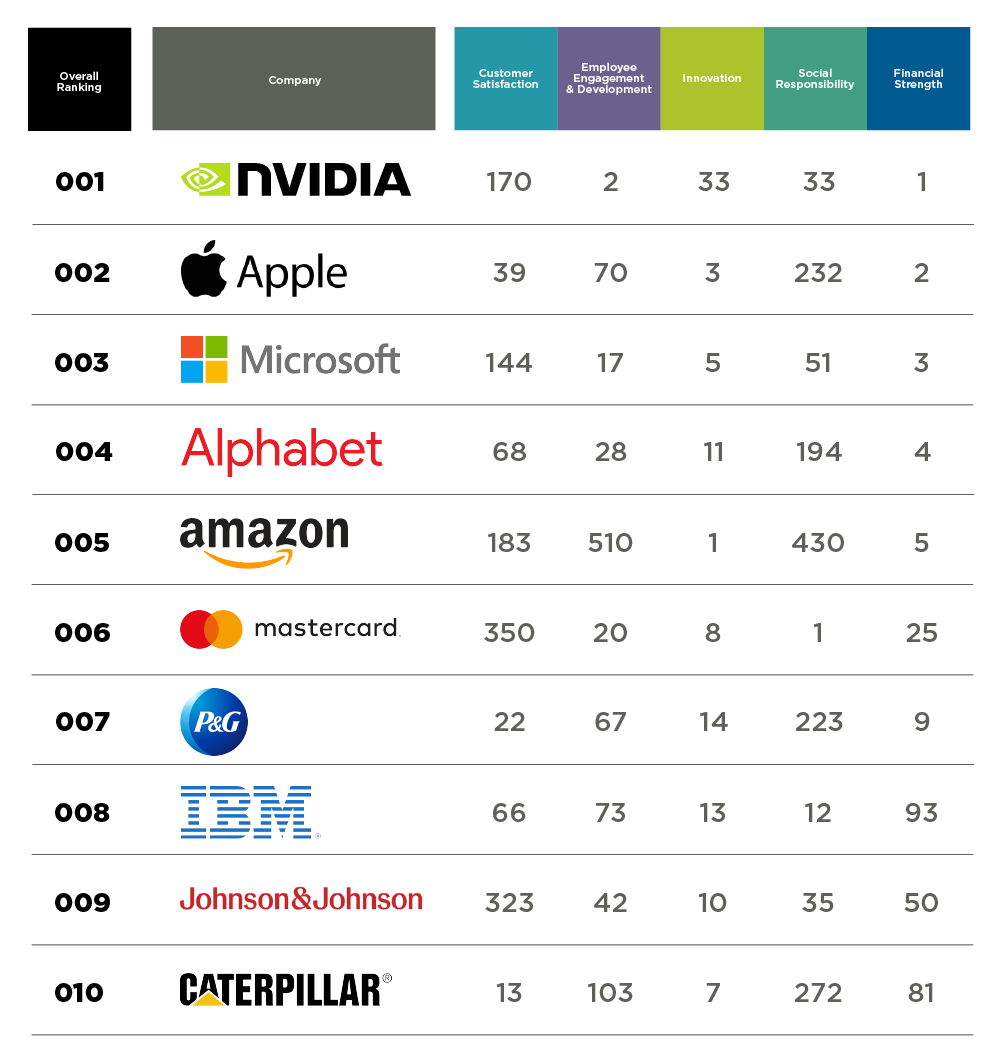
A deep-dive essay spotlighting Apple’s #1 position in 2024.
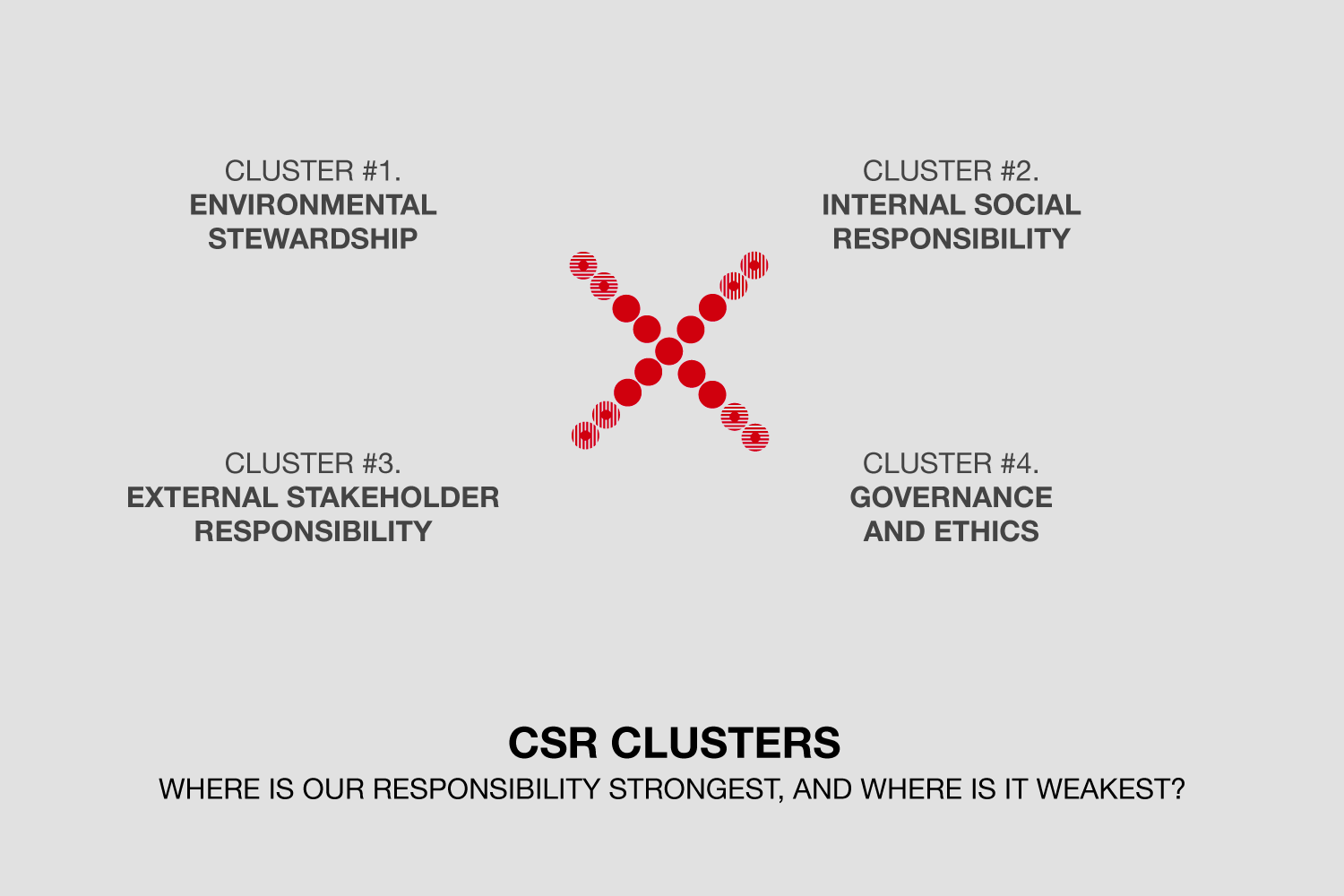
Read the Data Innovation Team’s essay on CSR:
Most leaders know corporate social responsibility matters.
The harder question is what CSR actually is.
Be Part of the Next Chapter
Join the release.
Sign up at [link coming soon] for the Zoom briefing in the first week of December, where we will release the Drucker Institute 100. Everyone who signs up will receive the list, our first report on the ranking data, key insights, and updates on our research.
For researchers.
If you are interested in the Institute's longitudinal data or in collaborating on research, contact us at michael.kelly@cgu.edu
For organizations.
If you want to understand your performance across the five dimensions, see whether a single weakness may be holding you back, explore your historical trajectory, or learn how the Institute's data and research might inform your work, start a conversation with us at michael.kelly@cgu.edu
Inspired by Drucker’s wisdom?
Peter Drucker changed how the world thinks about management.
The Drucker Institute promotes effective management and responsible leadership as foundational elements that contribute to Drucker’s vision for a thriving, resilient, and functioning society.
The Drucker School of Management applies those ideas today through its graduate education, research, and community engagement. Learn more about how they carry forward his vision.